Contract injection molding
from 160 to 1,360 tons.
Thirty injection presses under one roof, spanning high-cavitation tooling for small parts through to large-format structural components. One supplier can carry a full part portfolio as a program scales.
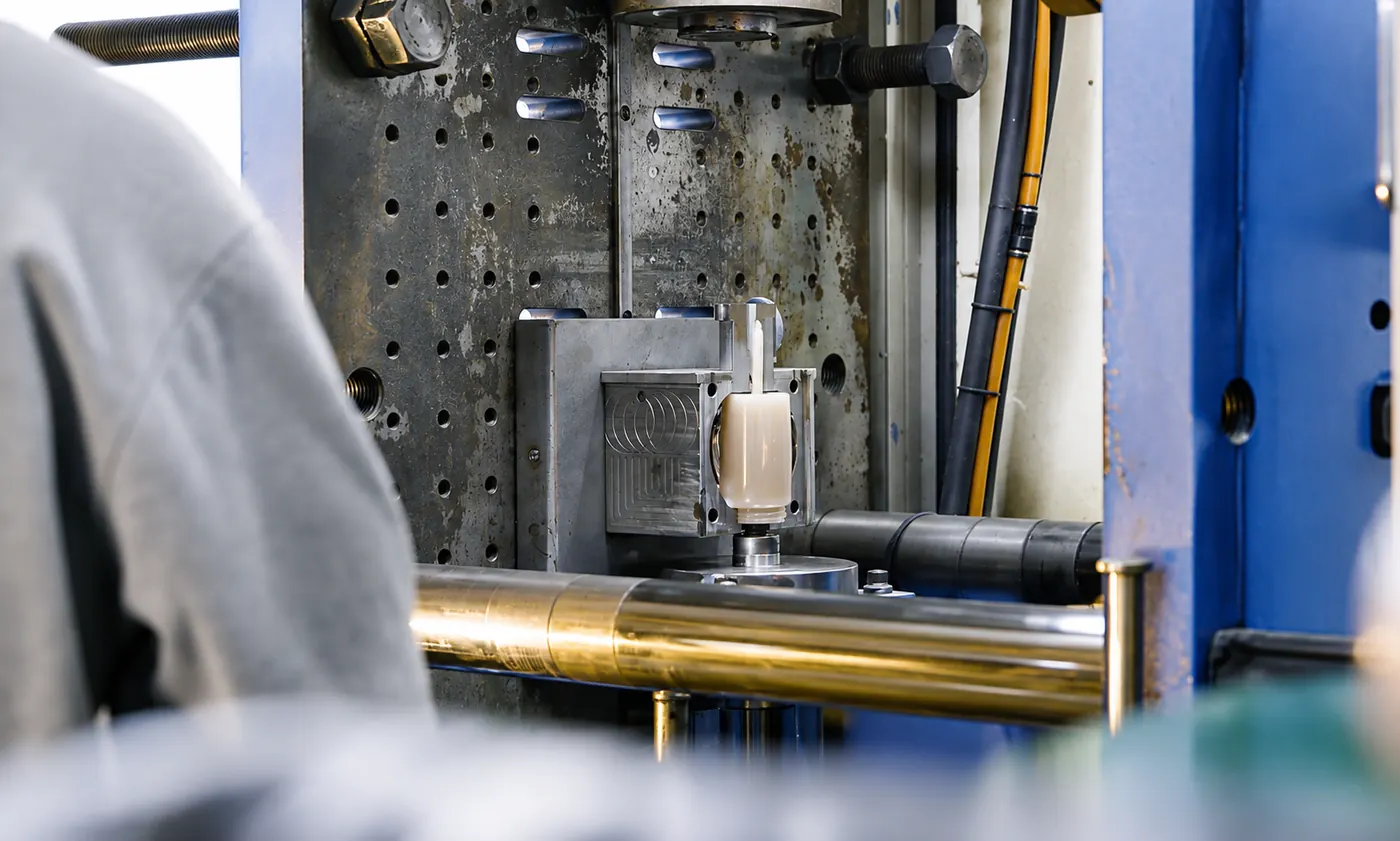
Full-spectrum tonnage under a single roof
Most contract molders specialise at one end of the tonnage range. Covering both means a client’s small high-cavitation components and large structural parts can sit with the same supplier, on the same quality system, with one point of accountability.
| Clamping force | Machines | Typical use |
|---|---|---|
| 160T | 14 machines | Small parts, high-cavitation: giftware & tableware |
| 210T | 4 machines | Small-to-mid parts: housings & fittings |
| 300T | 3 machines | Mid-size parts: enclosures, automotive trim |
| 350T | 2 machines | Mid-size, thicker-wall parts |
| 450T | 4 machines | Larger housings: industrial fittings |
| 800–1,360T | 3 machines | Large-format structural & OEM parts |
Molding processes we run
Injection molding
30 presses from 160T to 1,360T, multi-cavity tooling, tight-tolerance technical parts.
Over-molding
Multi-material parts and soft-touch surfaces in one build.
Blow molding
Three dedicated machines for hollow-body parts.
Heavy-wall sections
Thick-section parts up to 60 mm wall within standard capability.
Why tonnage decides the job
Clamping force has to exceed the force the injected plastic exerts trying to push the mold open — roughly the projected area of the part multiplied by cavity pressure. Too little clamping force and the mold flashes; too much means paying for press time the part never needed. Matching the part to the right press is the first cost decision in any program, and having the full range on site means that decision is made on engineering grounds rather than on whatever machine happens to be free.
Where multi-cavity tooling pays
A multi-cavity tool produces several parts per cycle from one shot. The tool costs more to build, but cycle time is shared across every cavity, so unit cost falls sharply at volume. The trade-off is decided at the tooling stage, not afterwards — which is why we design and cut tooling in-house rather than inheriting someone else's cavity count.
Cosmetic and structural parts on the same fleet
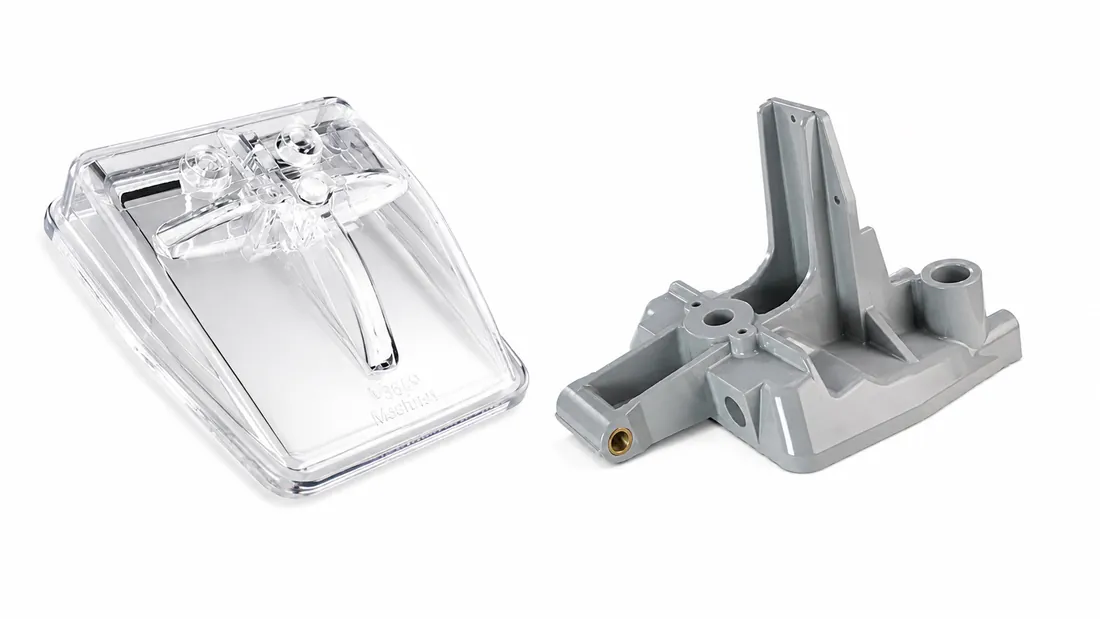
The same machines hold repeatable tolerances on high-gloss consumer parts where any surface defect is a reject, and on glass-filled engineering parts where dimensional stability under load is what matters. Those two disciplines rarely live in the same shop.
- ✕Optical-clarity resins: Tritan, PCTG, acrylic
- ✕Glass-filled engineering resins: PBT + GF
- ✕Multi-cavity tooling for high-volume small parts
- ✕Heavy-wall sections up to 60 mm
- ✕Over-molding for multi-material builds
- ✕Blow molding for hollow-body parts
Injection molding questions
What is the maximum part size you can mold?
Part size is governed by clamping force and platen size. Our largest presses run to 1,360 tons, which covers large-format structural and OEM parts; the 800–1,360T group is reserved for exactly that work. Send the part geometry with your enquiry and we will confirm against the specific press.
Can you run multi-cavity tooling for high volumes?
Yes. Fourteen of our thirty presses are 160T machines specifically suited to high-cavitation tooling, where several parts are produced per cycle. For high-volume small parts this is normally the decisive factor in unit cost, and it is designed in at the tooling stage.
Do you offer over-molding and two-shot parts?
Yes. Over-molding produces multi-material parts and soft-touch surfaces in one build — typically a rigid substrate with an elastomer such as TPE or TPR over it, removing a downstream assembly step and the failure mode that goes with it.
How thick a wall section can you mold?
Thick-section parts up to 60 mm wall are within standard capability. Heavy walls are difficult for most molders because cooling time rises steeply with thickness and sink marks and voids become likely, so many decline the work outright.
Do you also do blow molding?
Yes — three dedicated blow molding machines for hollow-body parts, alongside the injection fleet. Running both processes in one facility means a product combining molded and blown components does not have to be split across suppliers.
Send us a part. We’ll come back with a route to production.
Attach a drawing, STEP file or reference photo. We’ll respond with feasibility, tooling approach and an indicative lead time.
Or email Noah.j@dapyparis.com